Updated October 2026 · Written by the DeckStainIQ team at The Stain Depot
The short answer
Semi-transparent is the best fit for most decks. It shows the grain, adds real UV protection and, as a penetrating stain, wears away gradually instead of peeling. Go semi-solid if the wood is blotchy or mismatched. Think hard before putting solid stain on a deck floor.
Side by side
| Transparent / clear | Semi-transparent | Semi-solid | Solid | |
|---|---|---|---|---|
| Grain | Fully visible | Visible, with color | Mostly covered, texture shows | Hidden, like paint |
| UV protection | Low to moderate | Good | Very good | Highest |
| How it wears | Fades fast | Fades gradually | Fades, can show wear paths | Can crack and peel on floors |
| Recoating | Easy | Easy: clean and recoat | Fairly easy | Often needs scraping or stripping |
| Best for | New, good-looking wood you want natural | Most decks, fences and siding | Older or uneven wood | Siding and fences more than deck floors |
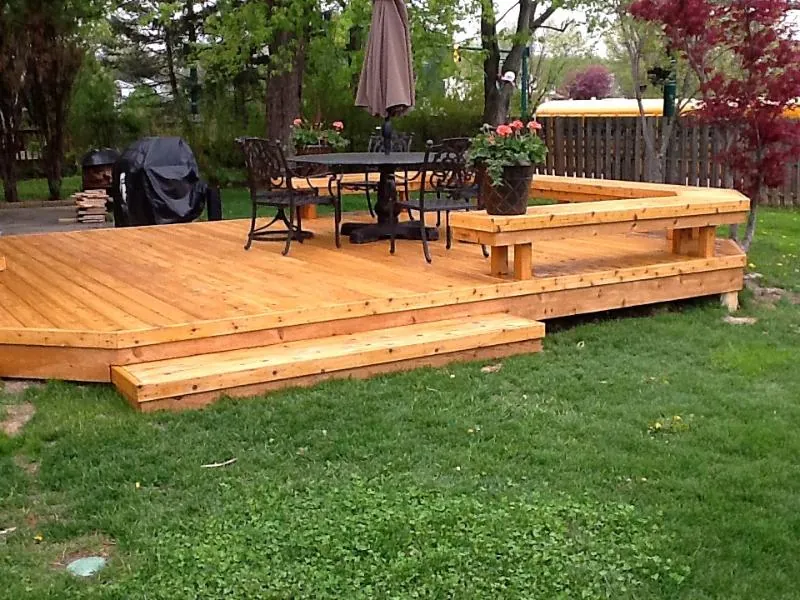
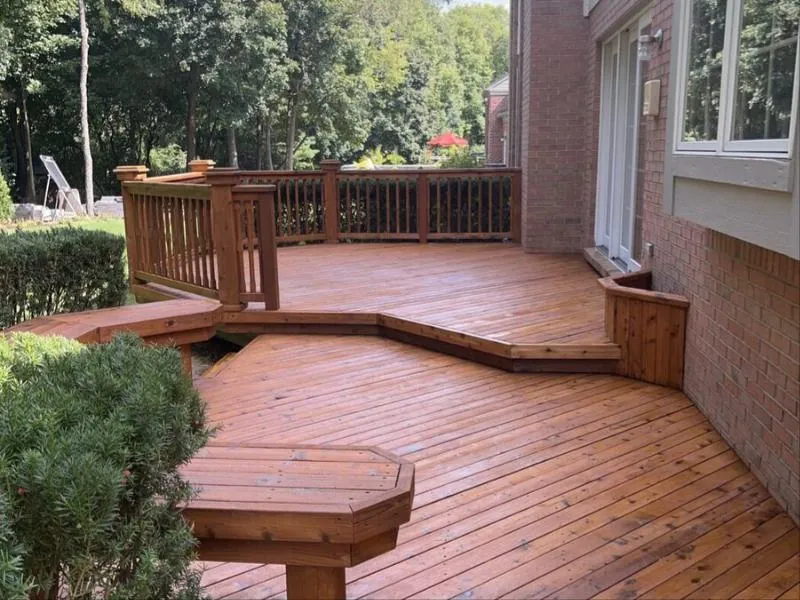
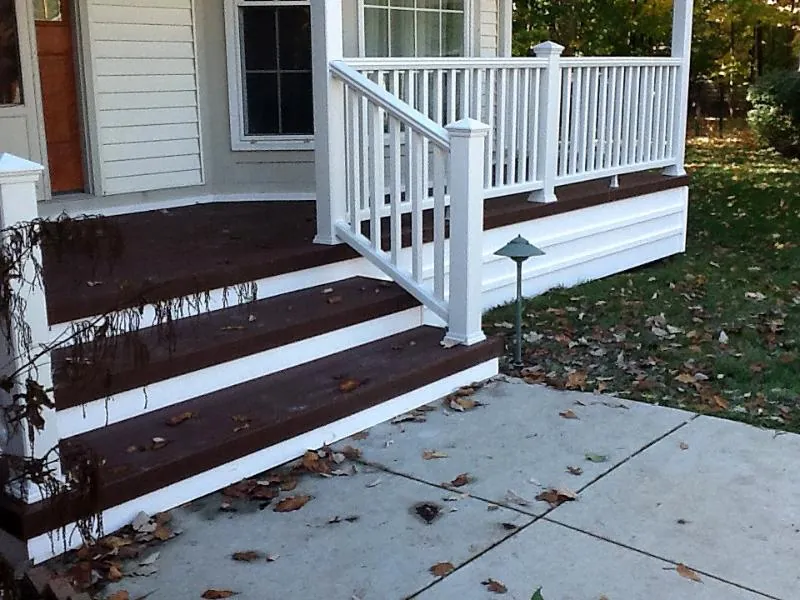
Transparent and clear
Transparent stains carry a little pigment; clear ones carry almost none. They look great on new cedar or hardwood, but with so little pigment the sun fades them quickly. Expect to recoat more often. Examples: Expert Stain & Seal Transparent, or a light tone of Penofin Red Label.
Semi-transparent
Enough pigment to block much of the sun's UV while the grain still shows through. Penetrating semi-transparent stains like TWP, Ready Seal and Expert Stain & Seal Semi-Transparent soak in rather than forming a skin, so they don't peel. Sikkens Cetol SRD is a one-coat semi-transparent with a matte finish.
Semi-solid
A good middle ground for older decks with gray patches, mismatched replacement boards or stains you can't clean out. It evens out the color while keeping some wood texture. Expert Stain & Seal Semi-Solid is one example.
Solid stain on a deck floor
Solid stain behaves a lot like paint. On vertical surfaces it lasts a long time. On a deck floor, sun, standing water and foot traffic can crack it, and when it fails it peels. Going back to a semi-transparent later means stripping it off with something like Woodrich HD-80. If you want more color coverage on a floor, semi-solid is usually the safer choice.
How color changes the picture
Within any type, darker and richer colors hold up longer than very light ones, because more pigment means more UV protection. Test a color on a spare board or a hidden spot first: the same color looks different on cedar, pine and older gray wood.
Common questions
Which lasts longer, semi-transparent or solid stain?
Solid stain holds its color longer, but on deck floors it can crack and peel. Semi-transparent fades sooner but wears gradually and is easy to recoat.
Can I put semi-transparent stain over solid stain?
Not successfully. A semi-transparent stain can’t soak in through solid stain. Strip the solid stain first.
Is transparent stain the same as clear sealer?
Close, but transparent stains carry a small amount of pigment for some UV protection. Clear sealers have little or none, so the wood grays faster.
Not sure which is right for your deck?
Our Stain Finder asks five quick questions and gives you a top pick and a runner-up that can ship to your state.
DeckStainIQ is run by the team at The Stain Depot, which sells the products mentioned here. We explain why we recommend each one.